
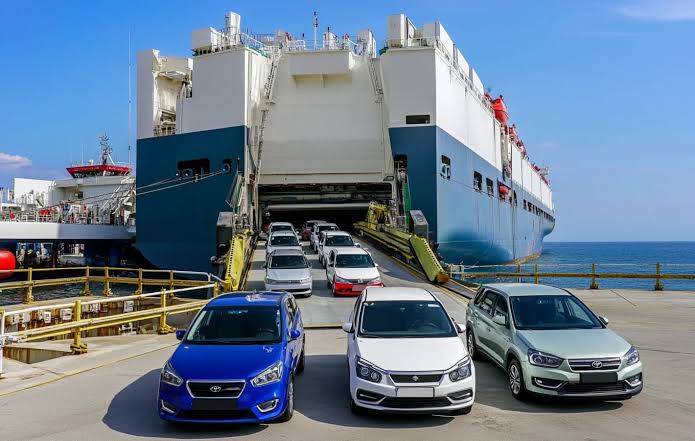
Importing a car into Nigeria involves more than the purchase price and shipping cost. Customs classification, duty rates, levies and additional charges all shape the final amount payable. Understanding the basic structure helps buyers and importers of popular models such as the Toyota Corolla, Camry, RAV4, Honda Accord, Hyundai Tucson and similar vehicles avoid surprises at the port.Most passenger cars fall under the Harmonized System heading 8703. This covers motor cars and other motor vehicles principally designed for the transport of persons. Within that heading, further digits distinguish engine type, size and whether the vehicle is new or used, but the broad 8703 classification is the starting point for ordinary saloons, SUVs and cross-overs. Commercial buses, trucks and specialised vehicles sit under different headings and often attract different treatment.Duty and levy rates are applied to the Customs value, normally the Cost, Insurance and Freight (CIF) figure determined by the authorities.
Nigeria Customs frequently uses VIN-based valuation rather than relying solely on the commercial invoice, so the declared purchase price is not always the final base. Once the CIF value is established, several layers of charges are calculated.Under the 2026 fiscal adjustments, the National Automotive Council levy on used vehicles was reduced to five per cent of CIF while the levy on new vehicles was set at ten per cent. Import duty itself continues to form a significant part of the total; recent policy statements have referred to reductions intended to ease the overall burden on both new and used imports. A surcharge is commonly applied on the duty amount, and smaller levies such as the ECOWAS Trade Liberalisation Scheme charge may also appear. Value Added Tax at 7.5 per cent is then calculated on the cumulative value of the vehicle plus the various duties and levies.
A newer element is the Green Tax introduced in 2026. Vehicles with engines below 2,000 cc generally attract no green surcharge. Engines between 2,000 cc and 3,999 cc attract a two per cent charge, while engines of 4,000 cc and above attract four per cent. Electric vehicles, certain mass-transit buses and locally manufactured vehicles are typically exempt from this surcharge. For popular models the engine-size band therefore matters. A 1.8-litre Corolla or similar compact sits in the zero green-tax band. A 2.5-litre Camry or RAV4 falls into the two per cent band. Larger-engine SUVs and luxury models can attract the higher four per cent rate.The practical difference between new and used vehicles appears mainly in the NAC levy rate and sometimes in the overall policy emphasis. Used cars (Tokunbo) currently benefit from the lower five per cent NAC levy, while new cars face the ten per cent rate. Age limits still apply; vehicles that exceed the permitted age from the year of manufacture face rejection or additional barriers regardless of the duty calculation.
Because the full stack includes duty, NAC levy, green tax where applicable, surcharge, smaller levies and VAT, the total customs take is substantially higher than any single percentage suggests. Exchange-rate movements between the time of purchase and the time of clearance also affect the naira amount. Importers of high-volume models such as the Corolla, Camry, Honda Civic or Accord, and popular SUVs should therefore work with a clear estimate based on current rates and then confirm the exact computation with their clearing agent or the Nigeria Customs Service before finalising a purchase.Preferential treatment exists for certain categories. Fully electric vehicles and some gas-powered or dedicated CNG vehicles have been granted reliefs under cleaner-mobility measures. Locally assembled vehicles are intended to enjoy a more favourable position relative to fully built-up imports, which is why the duty differential between the two remains a point of discussion between government and manufacturers.
Rates and administrative practices can change with new fiscal measures or operational circulars. The safest approach for anyone importing a popular model is to obtain a current breakdown using the vehicle’s exact specification year, make, model, engine capacity and whether it is new or used rather than relying on older rule-of-thumb percentages. With the HS 8703 classification as the starting point, the combination of reduced NAC levies, engine-based green tax and the remaining duty and VAT layers determines what a Corolla, Camry, RAV4 or similar vehicle will actually cost to clear in 2026.