
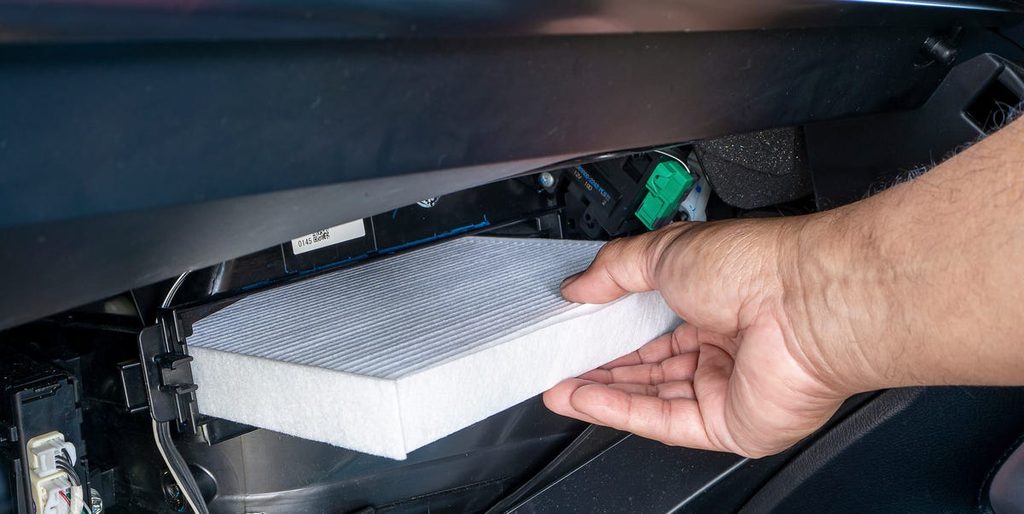
The air inside a car can quickly become less pleasant than the air outside, especially in dusty or polluted environments. Newer vehicles address this with cabin filters and, on some models, additional systems such as ionizers or air-quality sensors. These features work quietly in the background, yet they have a noticeable effect on comfort, odour control and the amount of particulate matter that reaches the occupants.The cabin filter, sometimes called the pollen filter or microfilter, sits in the heating, ventilation and air-conditioning system. Its job is to clean the air drawn from outside before that air enters the passenger compartment. Basic versions use a paper or synthetic media that traps larger particles such as dust, pollen and some soot. More advanced filters add an activated-carbon layer that adsorbs odours, exhaust fumes and certain chemical vapours. The best filters combine fine particle filtration with odour control and are designed to maintain airflow even as they accumulate debris.In everyday use the difference is clear. A fresh, high-quality cabin filter reduces the fine dust that settles on the dashboard and leaves a film on interior surfaces.
It also lessens the irritation that sensitive passengers feel when pollen counts are high or when the vehicle is stuck behind older trucks and buses. In cities where harmattan dust or construction activity is common, the filter becomes one of the more effective defences against airborne grit. Because the air-conditioning system recirculates cabin air or draws in outside air depending on the setting, a clogged filter restricts both cooling performance and air quality.Replacement intervals vary by manufacturer and driving conditions. Many handbooks suggest changing the filter every 15,000 to 30,000 kilometres or once a year. In dusty environments the interval often needs to be shortened. A neglected filter becomes saturated, airflow drops, the air-conditioning struggles to cool the cabin efficiently, and unpleasant smells can develop as trapped material begins to degrade. Replacing the filter is usually a straightforward task on most modern cars and is one of the more cost-effective maintenance items for preserving both comfort and system performance.
Some newer vehicles go beyond passive filtration by adding active air-quality systems. Ionizers release negative ions into the cabin airflow. These ions attach to airborne particles, causing them to become heavier and settle or to be more easily captured by the filter. Manufacturers claim reductions in certain bacteria, allergens and odours. The effect is generally subtle rather than dramatic, yet many drivers notice fresher-smelling air, particularly when the system is first switched on or when the vehicle has been closed up in the sun. Ionizers typically operate automatically when the climate control is running and require little or no maintenance beyond the normal cabin-filter changes.A related feature found on higher trims is an automatic air-quality or pollution sensor. This monitors outside air for elevated levels of pollutants and can switch the system to recirculation mode when necessary, reducing the amount of contaminated air that enters the cabin. Once the outside air improves, the system returns to fresh-air mode. In heavy traffic or when driving behind older diesel vehicles the automatic switch to recirculation helps keep the interior air cleaner without constant manual adjustment.
The effectiveness of all these systems depends on proper operation of the climate-control unit itself. Blower speed, the balance between fresh and recirculated air, and the condition of the evaporator and ducts all influence results. Running the air-conditioning regularly, even in mild weather, helps keep the evaporator dry and reduces the chance of musty smells. Some vehicles include a dedicated air-purification or rapid-clean mode that increases blower speed and ionizer output for a short period to refresh the cabin quickly.In Nigerian conditions the combination of high dust levels, variable air quality and strong sunlight places extra demands on these systems. Harmattan periods load filters more rapidly. Urban traffic exhaust and open burning can introduce odours and fine particles that basic filters handle less effectively than carbon-equipped versions. Heat accelerates the breakdown of any organic material trapped in a neglected filter, making timely replacement more important. Vehicles that spend long periods in traffic benefit particularly from the ability to recirculate cleaner cabin air rather than continuously drawing in polluted outside air.
When assessing a newer car it is worth checking whether the cabin filter is easily accessible and what type is fitted. Confirming that an ionizer or automatic air-quality system is present and functional adds further information. During a test drive, switching between fresh and recirculation modes and noting any change in odour or airflow gives a practical sense of the system’s condition. A musty smell when the air-conditioning first engages often points to a saturated filter or a damp evaporator that needs attention.Cabin filters and ionizers do not create a sealed, hospital-grade environment, yet they meaningfully improve the air that occupants breathe during daily journeys. A good filter removes a substantial portion of dust and pollen. An activated-carbon element reduces many common odours.
An ionizer and automatic pollution sensor add further refinement on vehicles that offer them. Keeping the filter fresh and the climate system properly maintained ensures these features continue to work as intended. In environments where outside air is frequently dusty or polluted, that maintenance is one of the simpler ways to make every trip more comfortable and healthier for everyone in the car.